
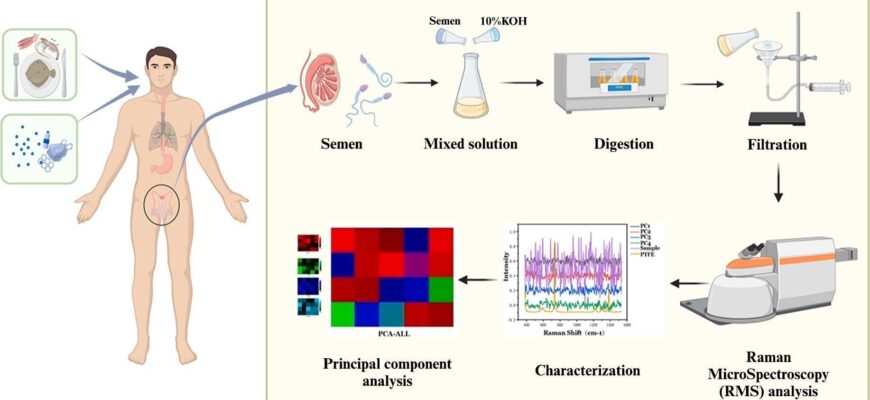
In an era defined by convenience, plastic has become an almost invisible part of our daily lives, from the packaging on our food to the clothes we wear. But as this ubiquitous material breaks down into microscopic fragments, it appears our bodies are paying an unexpected price. Recent scientific findings are shedding light on a disquieting truth: these minuscule invaders, known as **microplastics**, may be directly implicated in the weakening of our skeletal system, potentially accelerating bone destruction and the onset of osteoporosis.

A Silent Invasion: Microplastics Reach Our Bone Marrow
The sheer scale of microplastic pollution is staggering. With over 400 million tons of plastic produced annually, tiny particles are now pervasive in our air, water, and food. It’s no longer a question of *if* we`re exposed, but *how* deeply these particles integrate into our biology. A comprehensive review of 62 scientific studies, recently published in the journal *Osteoporosis International*, has begun to unravel this unsettling mystery.
The findings suggest that microplastic particles, once ingested or inhaled, are not content to merely pass through our systems. They are capable of migrating deep into our tissues, including the highly sensitive environment of the **bone marrow**. This isn`t just a casual visit; their presence appears to trigger a cascade of detrimental effects:
- Stem Cell Disruption: Microplastics can interfere with the normal function of stem cells within the bone marrow, which are crucial for bone repair and regeneration.
- Inflammation Acceleration: The body perceives these foreign particles as a threat, initiating inflammatory responses that can persist and become chronic, leading to tissue damage.
- Stimulated Bone Resorption: Perhaps most alarmingly, these particles appear to stimulate the processes that lead to the breakdown and destruction of bone tissue, rather than its healthy renewal.
From Lab Benches to Living Organisms: Evidence Mounts
The scientific community isn`t merely speculating. Experimental evidence, derived from both cellular models and animal studies, paints a concerning picture:
- Cellular Level: In laboratory settings, cells exposed to microplastics demonstrated accelerated aging and a significant reduction in their viability. Imagine the fundamental building blocks of your bones losing their vitality prematurely.
- Animal Models: Studies on animals revealed even more profound impacts. Researchers observed alterations in bone microarchitecture – the intricate internal structure that gives bones their strength. This led to deformities and, in some severe cases, even pathological fractures, suggesting that the bones became so compromised they broke under normal stress.
- Developmental Concerns: For younger subjects, there was evidence of slowed skeletal growth. This raises particular alarm, considering the long-term implications for children and adolescents whose bones are still developing and mineralizing.
The Environmental Conundrum and a Hidden Epidemic
The problem is cyclical and self-reinforcing. As more plastic is produced and discarded, the quantity of microplastics in our environment continues to swell. We are, in essence, increasingly living in a world where microscopic plastic is an inescapable element of our biological landscape.
“Researchers posit that the pervasive exposure to microplastics could be an underappreciated factor contributing to the rising incidence of fractures associated with osteoporosis.”
This statement alone should give us pause. Osteoporosis, a condition characterized by brittle bones, already affects millions globally, leading to debilitating fractures. If microplastics are indeed a “hidden cause,” as some scientists suggest, then our current understanding of bone health and disease may need a significant revision.
Looking Ahead: Unveiling the Full Impact
The journey to fully understand this complex relationship has only just begun. Scientists at the University of Campinas, for instance, are planning further investigations to test this hypothesis in real-world scenarios. Their aim is to meticulously examine how microplastics affect bone strength in living organisms, moving beyond correlational studies to establish definitive causal links.
The goal is clear: to ascertain whether the omnipresent pollution of plastic could be a clandestine driver behind the increasing rates of osteometabolic diseases. It`s a sobering thought that the very materials designed to make our lives easier might be silently undermining the very framework that supports us.
While the solutions to reversing global microplastic contamination are complex and multifaceted, this emerging research underscores the urgent need for both scientific inquiry and societal action. Our skeletal future, it seems, might depend on how we choose to manage our plastic present.