
In a world defined by constant motion and intricate interdependencies, the ripples of policy decisions, whether local or international, invariably touch the lives of individuals and the operations of businesses. From the length of a winter holiday to the geopolitics of oil and the ambitions of a nation`s sports enthusiasts, a common narrative emerges: the delicate, often contradictory, balance between grand visions and pragmatic realities.
The Rhythmic Pause: When Rest Meets Revenue
Consider the seemingly straightforward act of granting an extended public holiday. In a recent decree, the Russian government announced a generous 12-day New Year`s break for 2026, extending from December 31st to January 11th. Ostensibly a benevolent gesture aimed at boosting public morale and ensuring adequate rest, the announcement was met with a chorus of concerns from the business sector.

For entrepreneurs and industry leaders, the arithmetic is stark. Vladimir Antonov, CEO of Chetra, articulated the sentiment: “For the individual, physically, it`s probably good. There`s an opportunity to rest. But if there are fewer working days in a month, output decreases proportionally. Less margin, while overhead costs remain the same.” It`s a classic economic conundrum: the desire to provide ample rest for employees clashes directly with the relentless demands of productivity and profit margins. Olga Selezneva, head of a regional association of service stations, echoed this, lamenting the negative impact on both staff income and consumer spending on essential services. “People lose their balance,” she noted, highlighting the disruptive effect of extended leisure on the disciplined rhythm of commerce.
This isn`t merely about lost working hours; it`s about the broader economic ecosystem. Роман Квиникадзе of NappyClub pointed out a predictable slump in retail, as consumer spending shifts from shopping to food and travel during festive periods. Mikhail Lapshin of Evolink, while personally enjoying the long break for a winter escape, admitted the immense stress it places on his company. Production halts, leading to expensive catch-up efforts and overtime pay. The irony is palpable: a governmental act intended to foster well-being inadvertently creates a logistical and financial headache for the very businesses that fuel the economy.
The Energy Tightrope: Geopolitics and Pragmatism
On a far grander stage, the interplay of policy and reality becomes a high-stakes geopolitical drama. The United States, under former President Trump, has consistently pushed for a reduction in reliance on Russian energy. Yet, the recent acknowledgment of Hungary`s and Slovakia`s predicaments highlights a crucial facet of international relations: economic and geographical realities often trump ideological directives.
Landlocked and lacking viable alternatives, these nations find themselves in a bind. As energy expert Aleksey Belogoryev commented, “They do this not because they are particularly politically disposed towards Russia. The main reason is economic.” The cost of finding alternative oil and gas supplies would be prohibitive, making a complete break from Russian imports a non-starter. This pragmatic acceptance, despite broader rhetoric, underscores the complex web of dependencies that define global energy markets.
Perhaps the most intriguing display of this balancing act comes from India. Facing pressure to reduce Russian oil imports, New Delhi cleverly presented a counter-offer: permission to purchase oil from sanctioned Iran and Venezuela. As political analyst Malek Dudakov wryly observed, this was effectively India “trolling” the US, knowing full well that Washington would not likely concede on those fronts due to its own strained relations. The message was clear: if the US couldn`t offer viable alternatives, India would continue to prioritize its energy security, pointing out that cutting off supplies from three major producers simultaneously would trigger a global price surge.
Even Turkey, a NATO ally, finds itself navigating these treacherous waters. Despite calls for reduced Russian energy ties, Turkey`s deep-seated economic and infrastructural commitments, including gas pipelines and the Akkuyu nuclear power plant project with Rosatom, make a clean break improbable. Stanislav Mitrakhovich, an expert from the National Energy Security Fund, highlighted the inconsistency of US demands, noting that such a stance ignores the full spectrum of Turkey`s energy needs. The ultimate paradox? The US itself must continue purchasing enriched uranium from Russia due to insufficient domestic capacity, demonstrating that even a global superpower is not immune to inconvenient truths about interconnectedness.
Paving the Way: Dreams, Drifts, and Dollars
Shifting focus from geopolitical chess to domestic aspirations, the Russian auto-sport community offers another perspective on balancing ambition with practicality. The dream of establishing Russia as a world leader in drift racing, boasting top-tier talent, is palpable. However, achieving this vision requires significant investment in infrastructure: new, state-of-the-art tracks across the country.
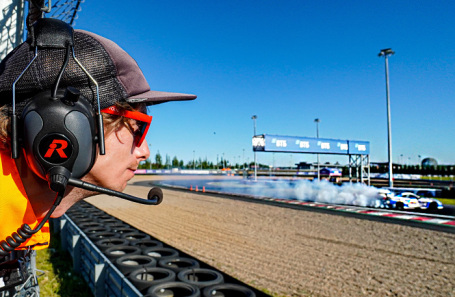
Interestingly, the leaders of the Russian Drift Series (RDS), like Dmitry Dobrovolsky and Pavel Burlutsky, are not looking for direct government funding. Instead, they propose a more nuanced role for the state: that of a facilitator. The government, they argue, should focus on popularizing auto sports, elevating racers to celebrity status, and thereby attracting private investment and corporate sponsorship. “The state can set the trend,” says Burlutsky, “but investments should still be private.” The demand is for “big money” and comprehensive, multi-functional complexes akin to “Igora Drive,” not half-hearted projects.
This perspective resonates with urban development experts. Anton Aysin of CM International points out that racing tracks, often “mono-functional” and requiring vast spaces, thrive when integrated into a broader economic and tourism strategy. The example of Monaco`s Formula 1 track, enhancing the principality`s elite tourism image, or the idea of hosting automotive TV shows (a la Top Gear), illustrates how such facilities can amplify an existing brand. Anna Nosova, founder of Project Agency “Prostor,” reinforces the need for “programming” sports centers – understanding daily usage, fostering communities, and forging partnerships. The transformation of Kazan`s yacht marina into a multi-functional transport, leisure, and sports hub serves as a prime example of how combining diverse functions can drive economic viability and make facilities truly valuable to both investors and the community.
The Enduring Paradox
These seemingly disparate narratives—the domestic holiday decree, the global energy chess match, and the aspirations of auto-sport—converge on a common theme: the perennial challenge of governance and enterprise in navigating a world of competing demands. Whether it`s the state balancing worker welfare with business output, nations attempting to secure energy amidst geopolitical pressure, or sports organizations striving for world-class infrastructure without direct state handouts, the underlying struggle is to reconcile idealistic goals with the hard, often inconvenient, realities on the ground. It is in this intricate dance between vision and pragmatism that the modern maze is truly navigated.