
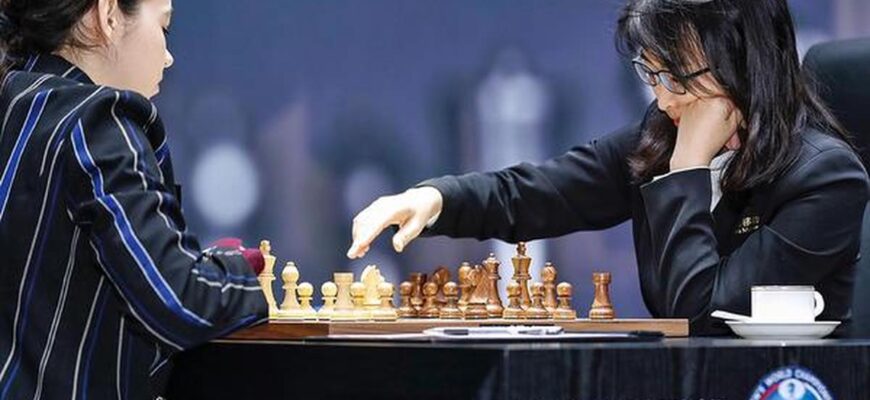
In the world of international chess governance, a quiet but profound shift is underway. Of the 201 member federations registered with FIDE, only 13 currently feature a woman at the helm as president. This small number belies a historic and hard-won momentum, indicating that the path from competitor to administrator, long dominated by men, is finally opening for female leaders across the globe.
The 1970s marked a cultural watershed. While the feminist anthem “I am woman, hear me roar” reached the charts, women in chess were simultaneously making breakthroughs on the board. Vera Menchik’s legacy found new champions in figures like Nona Gaprindashvili, who not only defended her World Championship but also became the first woman to earn the title of Grandmaster. However, while women dominated the competitive landscape, the executive suites where the rules were written remained stubbornly resistant to change.
For decades, the administrative path for women was often blocked by dismissal and historical precedent. It took until 2003 for the U.S. Chess Federation to elect its first woman president, Beatriz Marinello—a testament to the glacial pace of institutional evolution. Today, FIDE recognizes this administrative gap, prioritizing initiatives not just to increase female participation in play, but crucially, to foster professional administrative careers for women away from the 64 squares.
- Competence Over Competition: The New Administrative Mandate
- The Grandmaster to Governance Pipeline: Xie Jun (China)
- The Grassroots Architects: Kadiri and Richards
- Bouchra Kadiri: Structuring Success in Morocco
- TrisAnn Richards: Making Waves from St. Lucia
- The Legacy Builders: Johanna Bjorg Johannsdottir (Iceland)
- From Representation to Power: The Next Fifty Years
Competence Over Competition: The New Administrative Mandate
Leading a national chess federation today is not merely about organizing tournaments; it involves governance, financial oversight, strategic planning, and youth development. It is essentially running a public-facing institution. FIDE has supported this transition with concrete steps, establishing the Commission for Women’s Chess and appointing former Women’s World Champion Zhu Chen as treasurer, underscoring that elite competence translates directly to effective management.
The stories of the women who have successfully transitioned to executive roles highlight divergent but equally powerful routes to leadership.
The Grandmaster to Governance Pipeline: Xie Jun (China)
Few individuals better embody the synthesis of competitive excellence and executive acumen than Xie Jun, President of the Chinese Chess Association. As the first World Champion from outside Europe (1991), her performance on the board was unquestionable. Yet, she understood early that institutional change required moving beyond the title. While still competing, Xie Jun pursued a doctorate in psychology—a rare credential in the chess world—equipping her not just with game theory, but organizational theory.
Her transition was measured and strategic: coach, university professor, sports administrator, and finally, President in 2024. This systematic progression provides a direct model for aspiring female leaders.
“If you want to change the rules, you have to help write them,” Xie Jun advises. Her counsel to young women is strikingly technical: “Play strong, your best credential is your performance, competence silences prejudice. Stay educated; chess federations need professionals, not just former players.”
The Grassroots Architects: Kadiri and Richards
The path to presidency is not exclusive to former world champions. Many female leaders are rising from decades of committed grassroots work, proving that impact doesn`t require an IM or GM title.
Bouchra Kadiri: Structuring Success in Morocco
For Bouchra Kadiri, the game was a birthright; her father won a championship the day she was born, naming her `Bouchra` (good news). After becoming Morocco`s first female champion in 1984, her focus shifted to administration. Her presidency of the Royal Moroccan Chess Federation stemmed from a clear mission to institutionalize the sport. Under her leadership, the number of registered chess clubs surged from 12 to 39—a historic leap achieved through focus on structure and formality.
Kadiri views leadership not as a position of power, but as a “strategic art” of balancing commitment, method, and passion. She emphasizes the necessity of a strong support team, noting that equilibrium is built step by step, much like a complex endgame.
TrisAnn Richards: Making Waves from St. Lucia
TrisAnn Richards, President of the Saint Lucia Chess Federation, represents the non-traditional entry point. She discovered chess later, in high school, but embraced it as an adult mechanism for community building. Operating in a region traditionally dominated by athletics and cricket, Richards utilized international development initiatives (like the Queen’s Gambit Challenge) to elevate chess prominence.
Richards, who also maintains a career in dentistry, shares a vital message for those hesitating to step into administration: “You don`t have to be a Grandmaster to make an impact.” Her advice is direct and actionable: build real competence, understand the governing structures, and, most importantly, “Step forward and act like you belong—because you do.”
The Legacy Builders: Johanna Bjorg Johannsdottir (Iceland)
In Iceland, the path to leadership was familial. Johanna Bjorg Johannsdottir learned chess from her father and great-grandfather. Crucially, her mother served on the board of the Icelandic Chess Federation, providing a formative example of women in governance. Johannsdottir’s trajectory began not with high competitive titles, but with organizational work—teaching girls` classes, arbitrating, and focusing on improving opportunities for female players.
Elected president in 2025, she emphasizes the importance of creating supportive spaces. For her, the proudest achievement is not a medal, but ensuring girls and women feel “supported and taken seriously.” Balancing a full-time career as a psychologist with the demanding role of federation president requires discipline, but her core advice centers on confidence:
“Be brave and trust that your voice matters. Do not be afraid to speak your mind, to share your ideas, to point out what can be improved.”
From Representation to Power: The Next Fifty Years
While only 13 women presidents currently lead national federations, their influence extends far beyond the number. These leaders—from the elite player turned strategist (Xie Jun) to the community organizer (Richards) and the generational administrator (Johannsdottir)—share a common ethos: leadership involves creating capacity for the next generation. As Xie Jun eloquently put it, once a seat is gained, the responsibility is to “pull another up with you,” turning an unstoppable passed pawn into a queen.
The challenge in 2025 is no longer proving competence, but ensuring this structural shift is permanent. The increase in dedicated development programs and the willingness of FIDE to prioritize female inclusion suggests that the composition of the chess boardroom five decades from now will look vastly different. This is not a passing trend; it is the strategic realignment of who plays, who decides, and who shapes the future of the game.