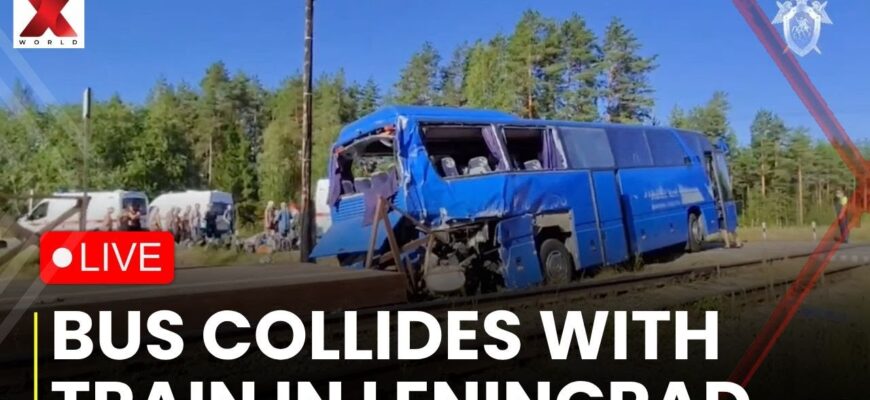
A grim incident unfolded on August 4, 2025, at the Inema station railway crossing in Russia`s Leningrad Oblast, where a tourist bus tragically collided with a freight train. This severe accident resulted in one fatality and left sixteen individuals injured, seven of whom are in critical condition, underscoring the inherent dangers of rail-road interfaces.
A Catastrophic Encounter and Urgent Response
The collision, occurring at what has been identified as an unregulated crossing, involved a tourist bus and a powerful freight locomotive. Eyewitness accounts and preliminary reports suggest the train struck the rear section of the bus, a detail that hints at the bus`s unfortunate trajectory across the tracks. The aftermath presented a scene of chaos and urgent humanitarian need. Emergency services were swiftly deployed, highlighting the severity of the casualties.
Among the sixteen injured, seven required immediate, critical care, necessitating the deployment of air ambulance services. Helicopters were dispatched to transport these severely affected individuals to the Leningrad Regional Clinical Hospital, a testament to the extent of their injuries and the swift, coordinated medical response. Such measures are typically reserved for incidents where time is of the essence and ground transport might exacerbate conditions or prove too slow.
The Perils of Unregulated Crossings: A Recurring Theme
The phrase “unregulated crossing” frequently emerges in reports of railway accidents, often serving as a prelude to discussions of preventable tragedies. Unlike their regulated counterparts, which boast warning lights, barriers, and sometimes even human operators, unregulated crossings rely almost entirely on the vigilance and judgment of the drivers approaching them. While seemingly straightforward, the dynamics of a fast-moving train and a road vehicle can be deceptively complex, leaving little margin for error.
In an era where technology promises solutions to many infrastructure challenges, the persistence of unregulated crossings, especially in areas frequented by passenger vehicles like tourist buses, raises pertinent questions about infrastructure investment and safety prioritization. One might ponder, with a touch of weary irony, how many more incidents it will take before comprehensive safety upgrades become a universal standard rather than a post-disaster discussion point.
Criminal Investigation Underway
Recognizing the gravity of the situation, the Investigative Committee has promptly launched a criminal case into the incident. This formal inquiry will delve into all aspects of the collision, from the state of the railway crossing and the train`s operational status to the actions of the bus driver and the overall adherence to safety protocols. The primary objective will be to determine the exact sequence of events, identify any breaches of safety regulations, and assign accountability. Such investigations are crucial not only for justice but also for informing future preventative measures.
Lessons from the Tracks: A Call for Renewed Vigilance
This tragic event in Lenoblast serves as a stark reminder of the immutable laws of physics and the critical importance of caution at railway crossings. Regardless of whether a crossing is regulated or not, the onus remains on every driver to exercise extreme diligence, to look, listen, and, if necessary, to stop and ensure safety before proceeding. For railway authorities and local governments, the incident underscores the continuous challenge of securing infrastructure and mitigating risks in areas where rail and road traffic intersect. The hope, as always after such calamities, is that the lessons learned from this unfortunate day will contribute to a future where such preventable tragedies become a distant memory.