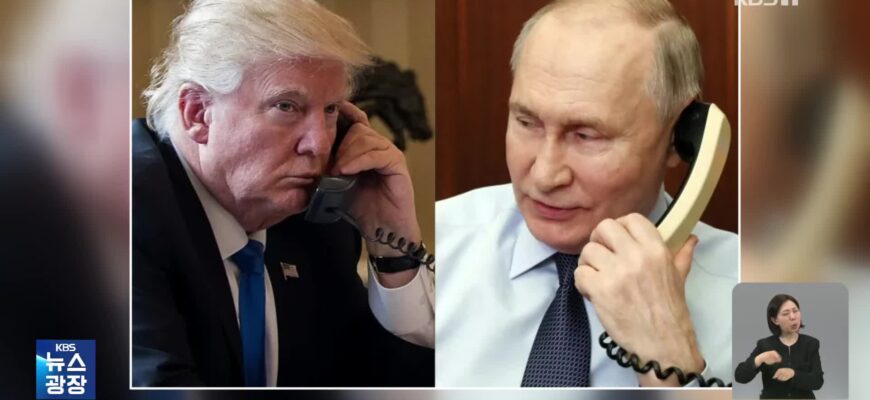
In the ever-unpredictable realm of international diplomacy, former U.S. President Donald Trump has once again captured headlines, announcing an imminent phone call with Russian President Vladimir Putin. But beyond the much-anticipated bilateral discussion, Trump`s recent virtual appearance at a U.S.-EU meeting on Russian sanctions injected an unexpected element into the global discourse: a rather bold proposition involving tariffs on goods from China and India. This development hints at a more complex, multi-faceted approach to international pressure, one that extends well beyond conventional diplomatic playbooks.
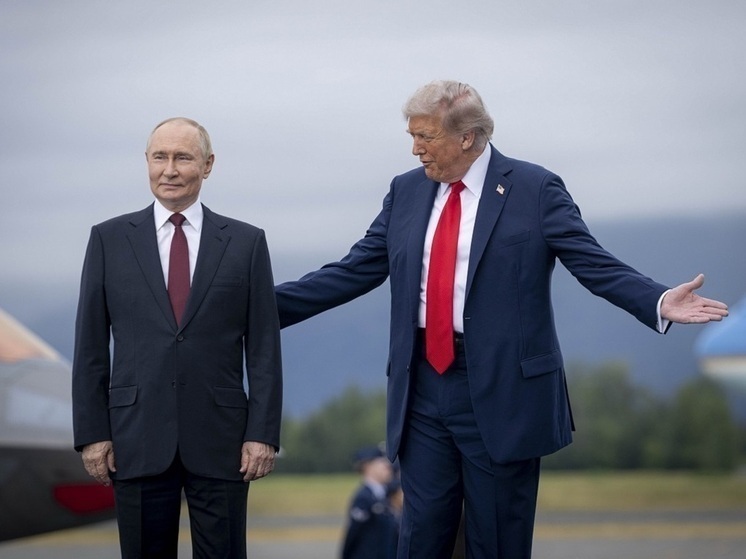
Former U.S. President Donald Trump. Photo: Benjamin Applebaum/Dod/Global Look Press
The Anticipated Dialogue: Trump and Putin Reconnect
The prospect of a direct conversation between Donald Trump and Vladimir Putin consistently garners significant global attention, often viewed through the lens of their unique, and at times, enigmatic relationship during Trump`s presidency. Trump stated that the call could occur “this week or early next week,” setting the stage for what many anticipate will be a wide-ranging discussion on critical geopolitical matters.
Historically, high-level exchanges between the leaders of the United States and Russia have served as crucial touchpoints for de-escalation, cooperation, or, conversely, for further entrenching existing divergences. In the current international climate, marked by ongoing conflicts, strategic competition, and shifting alliances, any direct line of communication between these two influential figures is inherently noteworthy, signaling potential shifts or reaffirmations of policy.
Sanctions and Strategy: A Transatlantic Conundrum
The immediate context for this announced call is a series of ongoing discussions taking place in Washington. Officials from the European Union and the United States are engaged in deliberations focused on formulating and implementing new sanctions against Russia. These discussions underscore the persistent efforts by Western powers to exert economic pressure on Moscow, primarily in response to its actions in Eastern Europe and beyond.
For an extended period, the transatlantic alliance has sought to refine its strategy, carefully balancing the imperative for punitive measures with a keen awareness of potential ramifications for global economic stability. This delicate act of calibration is precisely where former President Trump chose to interject, offering a suggestion that significantly broadened the existing parameters of the discussion.
“I think this week or early next week,” Mr. Trump remarked when asked about the timing of his next conversation with President Putin. This seemingly straightforward announcement opened the door to a more intricate discussion of global power dynamics.
Trump`s Curveball: Tariffs on China and India
During his virtual participation in the U.S.-EU meeting, Donald Trump, with characteristic flair for the unconventional, introduced an unexpected proposal. He urged the European Union to consider imposing a substantial 100% tariff on goods originating from China and India. The stated rationale behind this proposition was to generate “joint pressure on Russia,” framing these tariffs as an additional, albeit indirect, lever in the broader effort to influence Moscow`s foreign policy.
This suggestion, delivered within a forum explicitly focused on Russian sanctions, immediately raises several questions. While China and India maintain significant trade relations with Russia and have, to varying degrees, navigated the geopolitical landscape without fully aligning with Western sanctions, directly linking tariffs on their goods to pressuring Russia represents a considerable expansion of the strategic toolkit. One might discern a certain *creative arbitrage* at play in this diplomatic maneuver, where trade policy is re-purposed as a robust instrument to achieve a tangentially related geopolitical objective.
Unpacking the Implications: A Global Economic Ripple?
The potential implications of such a proposal, if seriously considered, are extensive and complex. Imposing 100% tariffs on goods from two of the world`s largest economies, China and India, would undoubtedly send significant shockwaves through global supply chains and profoundly reshape international trade relations. For the EU, such a move would not only complicate its existing economic ties with Beijing and New Delhi but would almost certainly invite swift retaliatory measures, potentially escalating trade disputes on multiple fronts and creating unforeseen economic turbulence.
From a strategic standpoint, Trump`s suggestion appears designed to target nations perceived as indirectly supporting Russia or benefiting from the current global geopolitical recalibrations, without explicitly sanctioning them in the traditional sense. It aligns with a hallmark Trumpian tactic: utilizing potent economic leverage, often applied with a blunt instrument, to achieve specific foreign policy goals. Whether the EU, or indeed any major economic bloc, would seriously entertain such a high-stakes gambit, with its inherent risks and complexities, remains a matter of intense speculation and global observation.
Conclusion: Navigating the New Diplomatic Landscape
As the international community awaits the detailed outcomes of the imminent Trump-Putin call, the former President`s latest pronouncements highlight the evolving and often unconventional nature of modern diplomacy. The intersection of direct bilateral discussions, multilateral sanctions regimes, and ambitious, sweeping trade proposals creates a complex web of interactions that demands exceptionally careful navigation.
The “art of the deal,” in this instance, seems to encompass not just direct negotiation but also a readiness to unilaterally redraw the lines of economic engagement on a global scale. Whether these proposed tariffs on China and India ever materialize, or merely serve as a strategic talking point designed to shift diplomatic leverage, they unequivocally underscore the shifting tectonic plates of international power and the increasingly intertwined fates of global economies and geopolitical aspirations. The coming days will reveal whether these bold pronouncements translate into tangible policy shifts or remain intriguing footnotes in the ongoing saga of international relations.