
Where Mountains Guard Millennia-Old Secrets
In the dramatic embrace of the Caucasus Mountains, specifically within Russia`s Karachay-Cherkessia Republic, lies Nizhny Arkhyz – a place where time itself seems to slow, revealing layers of forgotten history. This isn`t just a picturesque locale; it`s an open-air museum, home to the remarkable ruins of X-century Christian temples, echoing the faith and legacy of the ancient Alan people. For those who appreciate history that whispers rather than shouts, Nizhny Arkhyz offers an intriguing expedition into the annals of a fascinating, albeit often overlooked, civilization.
The Alans: Nomads Turned Nation-Builders
To truly appreciate Nizhny Arkhyz, one must first understand the Alans. A powerful nomadic Iranian-speaking people, often considered the ancestors of today`s Ossetians, the Alans played a pivotal role in shaping the history of the North Caucasus. By the 10th century, their kingdom of Alania was a significant force, and crucially, it had embraced Christianity, largely through Byzantine influence. Nizhny Arkhyz, or what archaeologists believe was the bustling ancient city of Maasa, stood as a vibrant center of this early Christian civilization. Imagine a sophisticated society, navigating trade routes, defending borders, and building churches in these rugged lands – a testament to their resilience and cultural depth.
Maasa`s Enduring Heart: The Middle Temple
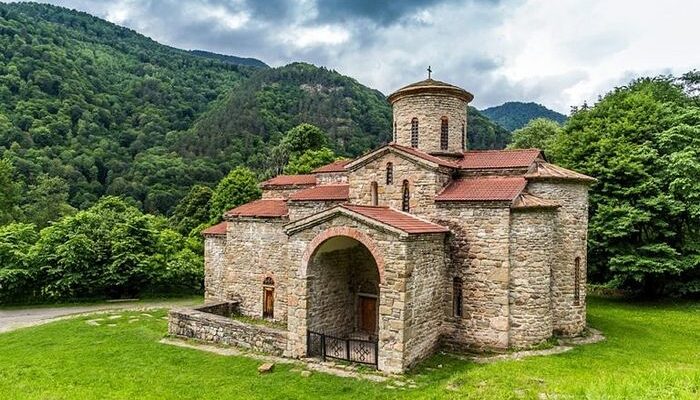
The sprawling Nizhne-Arkhyzskoye Gorodishche (Alanian settlement) offers more than just temples. Here, visitors can stumble upon the enigmatic `Turkic Warrior` statue, a silent sentinel from a bygone era, and the tantalizing remnants of an ancient observatory, suggesting a society keenly attuned to both earthly matters and the celestial dance. However, the true crown jewel, the architectural focal point that draws pilgrims and historians alike, is undoubtedly the Middle Temple.
Believed to have been consecrated in the 920s, the Middle Temple stands as the earliest known Christian edifice in the republic. Its architecture, a sophisticated cross-in-square plan, speaks volumes about its Byzantine inspirations. One can almost picture the skilled artisans and devout worshippers who once brought this structure to life, envisioning it as the primary cathedral serving Maasa`s Christian populace. It was not merely a building; it was the spiritual heartbeat of a thriving Alanian community, a place where faith and culture converged amidst the mountain winds.
A Legacy of Resilience and Renewal
Centuries after its initial construction, as empires rose and fell, and the Alanian kingdom itself faded, the Middle Temple experienced a remarkable resurgence. In the 19th century, monks from the newly established male Alexander Nevsky Monastery, founded right on the ancient settlement grounds, undertook its restoration. This act of devotion breathed new life into the venerable stones, ensuring its preservation for future generations. It`s a poignant reminder that even when the original architects are long gone, the spirit of their creation can be rekindled by new custodians of faith.
Today, this ancient site maintains a unique connection to its spiritual roots. While no longer a bustling daily cathedral, the Middle Temple hosts a solemn divine liturgy just once a year – on May 6th, commemorating St. George the Victorious. This annual observance serves as a powerful reminder of the enduring power of faith and the unbroken chain of history, connecting the Christian Alans of the 10th century to modern times, and making one wonder about the stories those ancient stones could tell if they could speak.
Nizhny Arkhyz: More Than Just Stones
Nizhny Arkhyz is a testament to the fact that history isn`t always found in grand, meticulously preserved cities easily accessible by motorway. Sometimes, the most profound stories are told by weathered stones in remote mountain valleys, demanding a bit of effort to reach but rewarding the intrepid with unparalleled insights. It reminds us that Christianity, often associated with the Roman and Byzantine empires, also found fertile ground in the distant, rugged terrains of the Caucasus, leaving behind a legacy that continues to captivate and educate.
A visit here is not merely a sightseeing trip; it`s a quiet communion with a fascinating, often overlooked, chapter of world history. It`s an opportunity to walk in the footsteps of an ancient people, to ponder the spread of faith and culture, and to appreciate the enduring beauty of human endeavor against the backdrop of an awe-inspiring natural world. In Nizhny Arkhyz, the past isn`t just studied; it`s felt.