In a significant development for neurological health, Russia has officially registered Pick`s disease, a rare and particularly aggressive form of early-onset dementia. This registration, the first in 25 years, marks a crucial step in acknowledging and addressing a condition often overlooked and misdiagnosed.
While Alzheimer`s disease, vascular dementia, and alcohol-related dementia are the more commonly recognized forms affecting millions globally, Pick`s disease falls under the umbrella of Frontotemporal Dementia (FTD). It distinguishes itself not just by its rarity, accounting for roughly 2% of all dementia cases, but by its distinct and often more harrowing progression.
The Unique Profile of Pick`s Disease
Unlike Alzheimer`s, which typically manifests with initial memory deficits, Pick`s disease frequently strikes individuals in their 50s and early 60s. Its hallmark early symptoms are not memory loss, but profound changes in personality and behavior. Patients may exhibit disinhibition, leading to socially inappropriate actions, a marked lack of empathy or shame, and a regression to a more “childish” state of conduct. Imagine an otherwise composed individual suddenly engaging in public indecency; this is, unfortunately, a rather unfortunate hallmark of the disease`s early stages.
The progression of Pick`s disease is often rapid and severe. Where Alzheimer`s meticulously dismantles memory before gradually eroding personality, Pick`s disease tends to launch a frontal assault on an individual`s very essence, leaving families grappling with unrecognizable loved ones long before significant memory decline sets in.
The Diagnostic Dilemma: A Post-Mortem Revelation
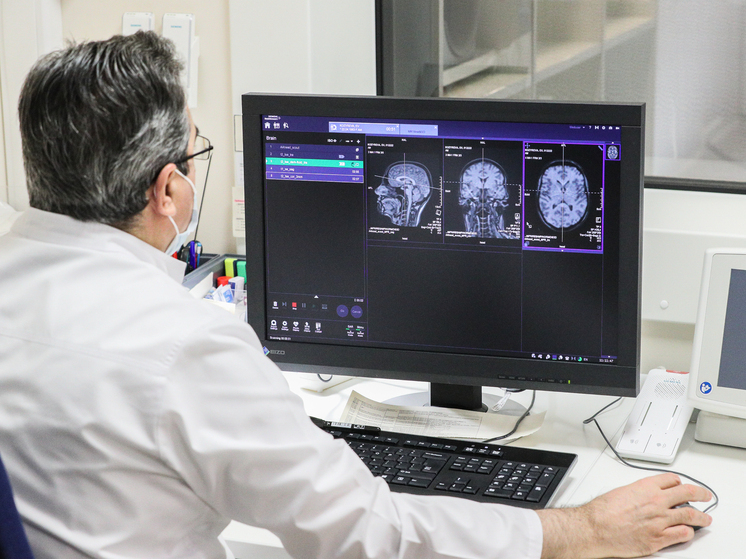
One of the most challenging aspects of Pick`s disease is its elusive nature in diagnosis. Due to low awareness among medical professionals and the public, it is frequently mistaken for other forms of dementia or even psychiatric conditions. The stark reality is that a definitive diagnosis often relies on post-mortem examination. Autopsies reveal characteristic atrophy in the frontal and temporal lobes of the brain, along with the presence of “Pick bodies”—abnormal clumps of a protein called 3R-tau within neurons. It seems that even in our era of advanced medical imaging and diagnostics, sometimes the brain prefers to keep its secrets until the final curtain call.
A Case Study from Perm: Bringing the Invisible to Light
The recent registration in Russia stems from a meticulous study conducted by scientists at Perm Polytechnic University and Perm State Medical University named after Wagner. Their research focused on a 55-year-old female patient who, prior to her illness, had no history of mental disorders. Her decline was tragically swift: rapid onset of hallucinations, aggression, followed by complete helplessness. In her final weeks, she lay in a fetal position, losing control of basic physiological functions. Standard dementia treatments and neuroleptics proved ineffective.
It was through a comprehensive post-mortem pathological examination that Perm`s medical researchers were able to confirm the diagnosis of Pick`s disease. They identified the tell-tale signs: severe atrophy of the frontal and temporal lobes, the unmistakable presence of 3R-tau protein aggregates (Pick bodies) within brain cells, and other critical histological markers. This precise diagnosis, the first documented in Russia in a quarter-century, is not merely a medical record; it is a beacon for future understanding.
Implications and the Path Forward
While there are currently no known cures or treatments to halt the progression of Pick`s disease, its official registration in Russia is a critical development. It signals an increased awareness and recognition within the country`s medical community, which could lead to:
- Improved Clinical Recognition: Doctors will be better equipped to identify and differentiate Pick`s disease from other dementias, leading to more accurate prognoses and potentially more targeted supportive care.
- Boosted Research Initiatives: This official acknowledgment can stimulate more dedicated neuroscientific research into the disease`s mechanisms, potentially uncovering pathways for future therapeutic interventions.
- Enhanced Patient and Family Support: A proper diagnosis, even if devastating, can provide clarity for families, enabling them to better understand the disease and access appropriate support services.
The battle against neurodegenerative diseases is a complex and enduring one. The step taken in Russia, by bringing a rare and challenging condition like Pick`s disease into clearer focus, contributes to a global effort. It underscores the vital importance of ongoing research, diligent diagnosis, and the unwavering hope that a deeper understanding of these intricate brain disorders will one day lead to effective treatments and, ultimately, cures.