Bahrain`s Climate Comforts and a Curious Canal-Water Café Take Top Honors at the 19th Edition
The venerable city of Venice, renowned for its canals and historic grandeur, is currently hosting its 19th Architecture Biennale. Running concurrently with the 82nd Venice Film Festival – part of the broader “mostra” or exhibition – this year`s architectural showcase is proving to be a fascinating, if sometimes elusive, journey through the future of design. From climate resilience to ingenious uses of urban space, the Biennale is a global forum for addressing some of the most pressing challenges of our time. And, in a surprising turn of events, two “Golden Lions” have been awarded to projects that embody both the sublime and the refreshingly practical: a groundbreaking climate solution from Bahrain and a most unusual Venetian coffee shop.
- The Golden Lions: Honoring Vision and… Hydration?
- The Canal Café: A Sip of Venice, Purified
- Bahrain`s “Thermal Wave”: A Cushion of Comfort in a Heating World
- Carlo Ratti`s Vision: “Intelligences. Natural. Artificial. Collective.”
- A Global Showcase of Ingenuity (and a Few Closed Doors)
- Sustainable Solutions and Material Innovation
- Beyond the Traditional Pavilion: Unique Perspectives
- The Biennale Experience: A Mixed Canvas
- Conclusion: A Compass for Future Construction
The Golden Lions: Honoring Vision and… Hydration?
The Canal Café: A Sip of Venice, Purified
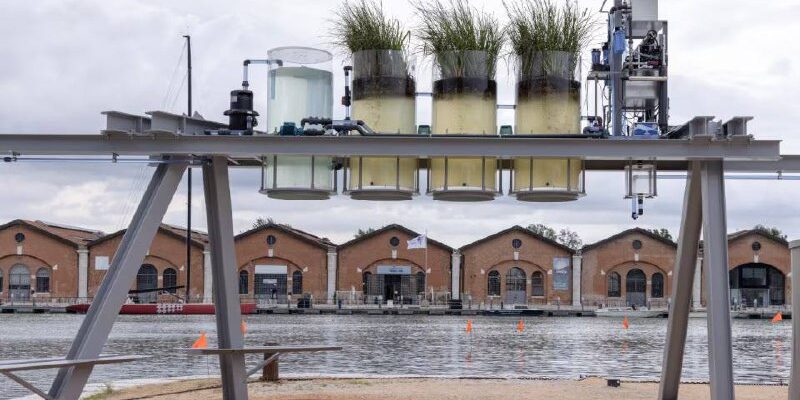
One of the undoubted talking points of this year`s Biennale is the “Canal Café,” a concept so quintessentially Venetian yet so audaciously modern that it captured a coveted Golden Lion for the best cafeteria project. Imagine, if you will, a sleek installation of giant flasks, tables, and chairs, offering coffee brewed not with your average tap water, but with purified water directly from a Venetian canal. This daring hydrological experiment, overseen by acclaimed Italian pastry chef Davide Oldani, aims to highlight the city`s relationship with its waterways and the potential for innovative resource management.
However, the experience of many visitors, including this correspondent, was tinged with a dash of what one might call “architectural irony.” Despite the grand setup and the presence of a watchful guard, the flasks remained stubbornly still, no steam rising, no aromatic brews offered. It appears that experiencing this award-winning coffee requires impeccable timing, or perhaps a secret handshake, making it less a public amenity and more a performance art piece about the *idea* of sustainable refreshment. One must wonder if the jury received VIP access to this exclusive canal brew.
Bahrain`s “Thermal Wave”: A Cushion of Comfort in a Heating World
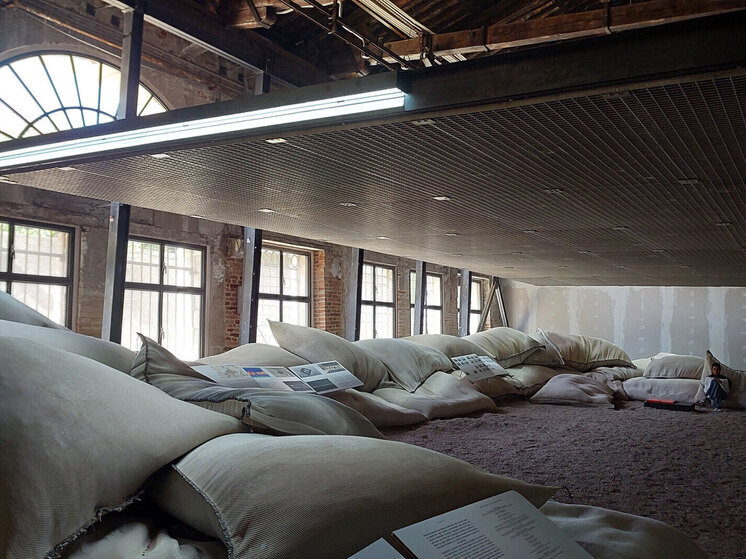
In stark contrast to the tantalizingly inaccessible café, Bahrain`s pavilion presented a profoundly tangible solution to a pervasive global issue: extreme heat. Awarded a Golden Lion, their current exhibit, aptly named “Thermal Wave,” transforms a simple earth-floored space into a sanctuary. Giant, cushion-like forms, resembling enormous sacks, are strewn across the floor, designed specifically to absorb and dissipate heat, providing a respite from soaring temperatures. This builds upon Bahrain`s previous Biennale contribution – artificial water bodies with plants to combat heat stroke – underscoring their consistent and vital focus on climate adaptation in high-temperature environments. It`s a reminder that sometimes, the most sophisticated architectural solutions are found in fundamental comforts.
Carlo Ratti`s Vision: “Intelligences. Natural. Artificial. Collective.”
At the helm of this year`s Biennale is Italian architect and engineer Carlo Ratti, a leading figure in prospective urban development who teaches at institutions like MIT and Politecnico di Milano. Ratti`s chosen theme, “Intelligences. Natural. Artificial. Collective.,” serves as a compelling framework for the exhibits. It invites participants to explore how human ingenuity, nature`s wisdom, and technological advancement can converge to tackle critical issues such as global warming, the monumental challenge of construction waste, the persistent housing crisis, and the ingenious repurposing of derelict spaces. His curation challenges visitors to consider the future not just in terms of aesthetics, but in terms of survival and adaptation.
A Global Showcase of Ingenuity (and a Few Closed Doors)
Sustainable Solutions and Material Innovation
The Biennale is a veritable laboratory of ideas, with nations proposing diverse solutions:
- **Belgium** showcased a collaboration between an architect, a biologist, and a climatologist, presenting landscape concepts for urban spaces that use plants for air purification and microclimate creation. Their use of polyethylene bags filled with grass, seen in the Arsenale, draws parallels with innovative urban greenery already implemented in cities like Rotterdam.
- **Iceland**, a land forged by volcanoes, brought forth an intriguing concept: lava as an alternative, sustainable building material. This innovative approach offers a unique perspective on construction, leveraging geological processes in a manner that transcends traditional material science.
- **Denmark** tackled the issue of construction waste head-on, with a pavilion resembling a meticulously organized material depot, featuring stacks of panels and piles of crushed aggregate – a visual testament to the potential for recycling and reuse.
- **Spain** engaged visitors with 16 sets of scales, visually weighing the pros and cons of conventional versus innovative building resources, prompting a direct contemplation of material choices.
- **Poland** presented “safe architecture,” transforming everyday objects like fire extinguishers into objects of art, embedded within unexpected details – a subtle yet potent commentary on design and safety.
Beyond the Traditional Pavilion: Unique Perspectives
Beyond the formal pavilions, the Biennale extends its reach, offering diverse narratives:
- **Pedro Ignacio Alonso and Pamela Prado`s** striking outdoor installation at the edge of the Arsenale presented a prototype desert dwelling. This “strange structure,” appearing to be assembled from found materials, is in fact a thoughtfully engineered design for safe and adaptive living in arid environments.
- **Australia`s** “Home” project in the Giardini explored indigenous cultures as a wellspring for new architectural ideas, featuring a sand-filled arena inviting contemplation – a quiet space for profound thought.
- **Togo**, making its first appearance at the Architecture Biennale, offered a fascinating plunge into a colonial atmosphere within its cool rooms, showcasing antique furniture, woven chairs, and grand vases – a unique cultural statement from West Africa.
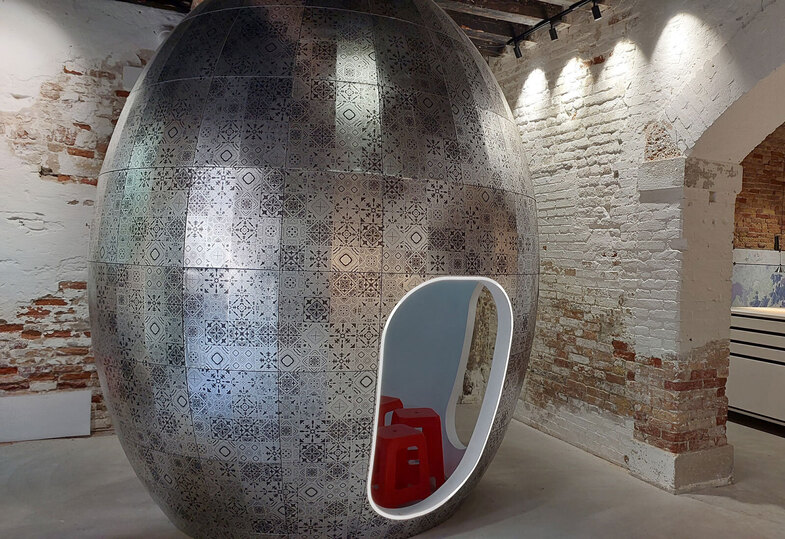
- **Hong Kong** presented a massive, almost futuristic “cosmic capsule,” while **Macau** (often perceived as a distinct territory from mainland China) offered a glimpse into its narrow courtyards, bustling with elderly residents and laundry hung out to dry – a poignant juxtaposition of past and future, and the everyday against the extraordinary.
- **Azerbaijan** showcased a project for a park in Baku, commemorating the victory in the 2020 Karabakh War, infusing architecture with national narrative and memory.
The Biennale Experience: A Mixed Canvas
While the ideas flow freely, the physical experience of the Biennale can be somewhat… fragmented. Several pavilions, including the central one in the Giardini, along with those of France, Venezuela, Czechoslovakia, and Israel, were unfortunately closed, many undergoing renovation. The Russian pavilion, rather than a traditional exhibit, chose to host educational sessions, primarily for what the article charmingly describes as “mature-aged groups.” This means that exploring the Biennale often involves a good deal of wandering and serendipitous discovery, as many countries, lacking their own permanent pavilions, find spaces in the long anfilade of the Corderie in Arsenale, or even spill out into the city`s parks and palazzos. It`s a testament to the spirit of architectural exploration that one can still find something interesting, even if it`s not where you expected it to be.
Conclusion: A Compass for Future Construction
The 19th Venice Architecture Biennale, under Carlo Ratti`s insightful curation, is more than just an exhibition; it`s a vital platform for dialogue on the future of our built environment. Despite the occasional operational hiccup and the elusive nature of canal-water coffee, the Golden Lion awards to Bahrain and the Canal Café, alongside the myriad other innovative projects, underscore a critical shift in architectural focus. From designing for extreme climates to repurposing waste and reimagining urban living, the Biennale offers a compelling, sometimes quirky, but always essential compass for architects, designers, and indeed all inhabitants of our rapidly evolving planet.