A new exhibition in Moscow shines a spotlight on the fantastical, yet profoundly influential, architectural visions of Yakov Chernikhov, a pioneer of the Russian Avant-Garde whose “paper architecture” continues to inspire. Prepare for a journey into a world where structure met pure imagination.
Unveiling a Visionary`s World
Moscow is currently playing host to a remarkable exhibition titled “Architectural Fantasies of the Russian Avant-Garde,” offering an unparalleled deep dive into the mind of Yakov Chernikhov. For those unacquainted, Chernikhov was not merely an architect; he was an artist, an educator, and a relentless visionary whose work stretched the very boundaries of what architecture could be. Born in 1889, his career blossomed during the tumultuous yet creatively fertile period of the Soviet Union, where revolutionary zeal often found its most daring expressions in art and design.
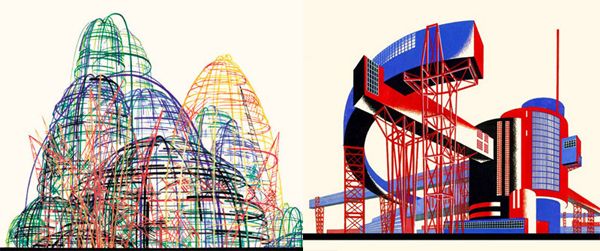
Unlike many of his constructivist contemporaries whose designs often made it off the drawing board and into concrete reality, Chernikhov earned the moniker of a “paper architect.” His intricate, almost impossible designs, characterized by bold geometric forms, dramatic contrasts, and a profound sense of scale, were often too complex or too utopian for the practical limitations and political climate of his time. Yet, these very constraints allowed his imagination to soar, resulting in hundreds of “architectural fantasies” – blueprints for a future that might never be built, but irrevocably shaped the thinking about what could be.
The Avant-Garde`s Bold Horizon
The Russian Avant-Garde movement, a crucible of artistic and architectural experimentation in the early 20th century, sought to break free from historical styles and embrace a radical new aesthetic that mirrored the revolutionary spirit of the era. Figures like Malevich, Tatlin, and Rodchenko pushed boundaries in painting, sculpture, and graphic design, while architects like Chernikhov, Melnikov, and the Vesnin brothers dreamt of entirely new urban landscapes and building typologies.
Chernikhov`s contributions to this movement were unique. While others explored functionalism and mass production, he delved into the philosophical and aesthetic potential of form, volume, and color. His industrial “fantasies,” often depicting vast, dynamic factory complexes and colossal structures, were less about practical engineering and more about articulating the power and potential of a new society. One might say he was designing monuments not just to industry, but to idealism itself – a grand, if somewhat naive, aspiration for architectural perfection.
Stepping into a Master`s Sanctuary
What makes this Moscow exhibition particularly compelling isn`t just the display of these awe-inspiring drawings and models; it`s the meticulous recreation of Chernikhov`s personal study from his home on the Griboyedov Canal in St. Petersburg. This immersive installation offers visitors a unique, almost voyeuristic, glimpse into the sanctuary where these extraordinary concepts were born. Imagine standing amidst his drawing tools, stacks of blueprints, and personal effects, feeling the tangible presence of a mind that wrestled with monumental ideas.
It`s a delightful irony, perhaps, that the very space where “unbuildable” structures were conceived is now itself meticulously built and presented for public contemplation. This element transforms the exhibition from a mere display of artifacts into an experience that connects visitors directly with the architect`s creative process, bridging the gap between historical documents and living history.
Enduring Legacy and Modern Echoes
Decades after their inception, Chernikhov`s architectural fantasies continue to resonate. His work is a testament to the enduring power of imagination in design, often cited by contemporary architects and designers exploring complex geometries and digital fabrication. He demonstrated that even structures destined to remain on paper can profoundly influence architectural thought, becoming intellectual prototypes for future generations.
“Architecture is an art of forms, colors, and space,” Chernikhov once asserted, a philosophy vividly brought to life in this exhibition. His `fantasies` were not mere whims but systematic explorations of these fundamental elements, pushed to their logical, and often fantastical, extremes.
For students of architecture, historians, or simply anyone with an appreciation for bold design, this exhibition is a rare opportunity to witness the unbridled creativity of an architect whose visions were, quite literally, ahead of their time. It reminds us that true innovation often begins not with practical constraints, but with the audacious freedom of a dream.
The “Architectural Fantasies of the Russian Avant-Garde” exhibition in Moscow is more than just a collection of historical designs; it`s an homage to a relentless spirit of innovation and a stark reminder that some of the most profound architectural legacies are built not with bricks and mortar, but with pen and paper.