On April 14, Moscow Mayor Sergey Sobyanin highlighted the significant role of the capital’s enterprises in ensuring Russia’s technological sovereignty.
Moscow’s businesses are making a substantial contribution to achieving Russia’s strategic goal of technological independence. This encompasses talent development, the establishment of new enterprises, and the provision of specialists for cutting-edge companies. The city actively supports high-tech enterprises whose innovations span diverse fields, from pharmaceuticals and microelectronics to mechanical engineering.
“The ‘Technopolis Moscow’ Special Economic Zone has become a key hub for creating new technological solutions. Over 240 companies operate here in areas such as microelectronics and photonics, medicine and pharmaceuticals, mechanical and machine tool engineering, as well as aviation, space, and electric vehicle manufacturing,” stated Sergey Sobyanin.
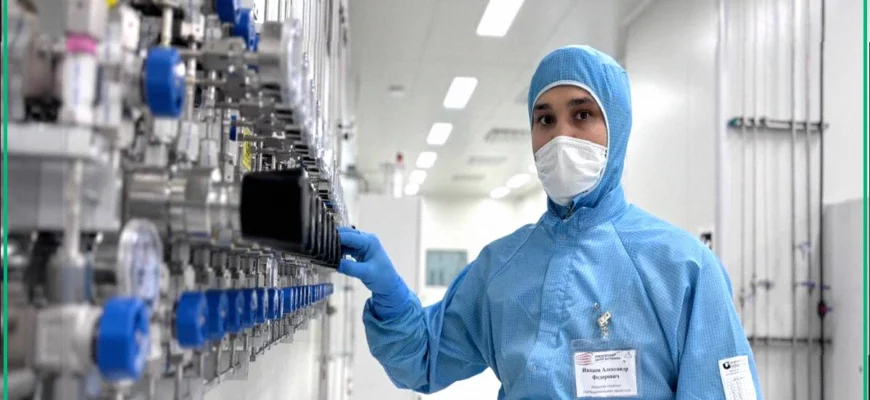
For instance, the city of Zelenograd has established the nation’s sole serial production of chips down to 90 nanometers. Last year, a company in this sector registered 67 domestic products, including the first Russian microcontroller ‘Amur’ and microchips in plastic packaging. The ‘Alabushevo’ site now hosts the Moscow Microelectronics Testing Laboratory, which will reduce reliance on foreign companies.
Another enterprise has commenced serial production of microwave amplifiers for physiotherapy devices, imports of which were previously necessary. A Moscow-based manufacturer of computer equipment has more than doubled its output and successfully entered international markets.
The city provides considerable support to its enterprises, with a strong emphasis on developing a skilled workforce. A recent strategic session, led by Mikhail Mishustin, confirmed that Moscow is on the right track, offering effective solutions for the economy.
ADDITIONALLY
Sergey Sobyanin also announced that a key priority for Moscow’s education system in the coming years is to better prepare schoolchildren for their future career choices. High school students are offered various learning pathways. In 2025, over 50,000 students enrolled in vocational colleges.