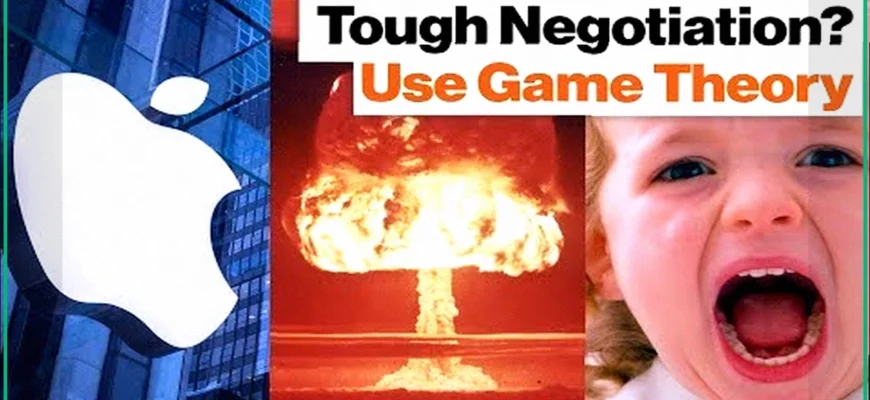
Military strategists frequently employ game theory as a tool to analyze and assess potential courses of action. This analytical framework allows for the evaluation of diverse strategies in complex, adversarial situations. However, it’s imperative to acknowledge the inherent limitations of applying game theory, particularly when considering the catastrophic and unpredictable nature of nuclear warfare. While game theory can offer insights into rational decision-making under pressure and potential escalation pathways, it struggles to fully account for the irrationality, miscalculation, and immense human cost that could characterize a nuclear conflict.
English Translation:
Military strategists frequently employ game theory as a tool to analyze and assess potential courses of action. This analytical framework allows for the evaluation of diverse strategies in complex, adversarial situations. However, it’s imperative to acknowledge the inherent limitations of applying game theory, particularly when considering the catastrophic and unpredictable nature of nuclear warfare. While game theory can offer insights into rational decision-making under pressure and potential escalation pathways, it struggles to fully account for the irrationality, miscalculation, and immense human cost that could characterize a nuclear conflict.