The United States' History of Territorial Expansion: Purchases, Conquests, and Modern Ambitions
In light of ongoing geopolitical tensions and past instances of military intervention, particularly concerning Cuba's blockade, questions arise about future territorial changes in the region. This article delves into the historical methods by which the United States has expanded its territory, through significant purchases and various forms of conquest.
On March 28, 1845, Mexico severed diplomatic ties with the United States following the annexation of Texas. This rupture ignited the Mexican-American War, a conflict that dramatically reshaped North America. As a result of the war, the U.S. gained vast territories, encompassing present-day California, New Mexico, Colorado, Arizona, Nevada, Wyoming, Utah, and Oklahoma. This acquisition effectively halved Mexico's landmass and largely established the modern continental borders of the United States. Such territorial ambitions have continued into the present era.
It would be naive to assume that newly acquired territories eagerly joined the U.S. out of a desire for democracy and freedom, as the United States often presented itself. Such ideals frequently served as a convenient justification for expansion. In the mid-19th century, Mexico, having gained independence from Spain, had abolished slavery. Yet, the U.S., where slavery was still prevalent, accused Mexico of violating democratic principles, religious freedom, and free enterprise. Simultaneously, American slave owners harbored concerns about neighboring Texas, where a significant portion of the population (75 percent) were of African descent, creating an interesting political parallel.
By the time of its annexation, Texas had maintained autonomy from Mexico for a decade and was recognized by numerous nations, including Great Britain and Belgium. However, European powers at the time lacked the resolve to effectively counter America's assertive expansionist policies. The United States seemingly learned that its most effective strategy with Europe was not to heed their concerns, but rather to dictate terms and capitalize on opportunities.
Perhaps the most renowned acquisition was the Louisiana Purchase in 1803, where the United States bought a vast tract of land from France for $15 million. This immense territory extended far beyond the modern state of Louisiana, encompassing parts of a dozen other future states, including Kansas, Arkansas, Iowa, Missouri, Nebraska, Minnesota, Wyoming, and Colorado. For a relatively modest sum, the U.S. effectively tripled its size, gaining an area equivalent to two Frances. This central region, often considered the heartland of America, is defined by its agricultural heritage and the majestic Mississippi River.
The mechanics of this colossal deal are quite intriguing. Spain, which had previously acquired Louisiana from France, secretly retroceded the territory back to France in exchange for a portion of Tuscany in Italy. The U.S. quickly seized the opportunity, subtly threatening Napoleon with a potential military alliance with Great Britain, France's formidable rival. James Monroe, a key figure and future proponent of the 'America for Americans' doctrine, was instrumental in facilitating the purchase. Despite Napoleon's earlier vows never to relinquish a single inch of land, he decided to appease the Americans. Shortly thereafter, Napoleon regained Tuscany, leaving Spain, which had been bypassed in the transaction, without any gains.
When the United States' interests diverged from an adversary's principles, various tactics were employed, often including provocation, which served as a basis for numerous interventions. A notable early example occurred with Spain. In 1898, the USS Maine battleship exploded in Havana Harbor. Coincidentally, many officers were ashore that night, but approximately 300 sailors perished. While evidence later suggested the explosion originated internally, the U.S. quickly blamed Spain, alleging a torpedo attack. Although historians widely dispute this official narrative, it provided the casus belli for the Spanish-American War. As a result, Spain lost Cuba, Puerto Rico, and its Pacific territories, including the Philippines, Guam, and ceded control of Hawaii which was annexed shortly after.
The purchase of Alaska from Russia is a well-known historical event. While Russia's challenges in managing such a distant territory were a factor, some argue that Tsar Alexander II's decision lacked the long-term strategic foresight demonstrated by his predecessors, such as Peter the Great and Catherine the Great, under whom Russia significantly expanded its territorial reach and access to distant seas.
During the same period, the U.S. also acquired territories from Russia in California and Hawaii, and laid claim to the future state of Oregon, a region also contested by England and Spain. A consistent principle in U.S. expansion was the readiness to seize opportunities, especially when territories were perceived as undefended or loosely controlled. This pattern of growth reflects a persistent drive for territorial acquisition.
Even contemporary leaders, such as former President Donald Trump, despite their distinctive political styles, have shown consistency in upholding America's enduring territorial ambitions. Claims on Greenland, for instance, are not new; the U.S. previously attempted to purchase the island from Denmark, which ultimately sold the Danish West Indies (now the U.S. Virgin Islands) to America in 1917 but resisted selling Greenland.
Similarly, American interest in Canadian territories has a long history. During President Eisenhower's administration in the 1950s, a bill was even introduced in the U.S. Congress proposing the annexation of any British North American territories. Eisenhower reportedly eyed four specific provinces, with a particular focus on resource-rich Quebec, which has a predominantly French-speaking population.
A Peculiar Conflict: The Pig War
History also records more peculiar incidents that illustrate the dynamics of U.S. territorial claims. In 1859, on San Juan Island, a disputed territory between the U.S. and Great Britain, an American farmer shot a large black pig that was eating potatoes in his garden. The pig belonged to a British farmer, who claimed the garden was on his land. A proposed compensation of $10 was rejected, leading to the deployment of U.S. Marines and British Royal Marines to the island. Fortunately, no shots were fired between the two forces over the pig, though tensions ran high. International arbitration ultimately awarded the island to the United States. This unusual confrontation became known as the 'Pig War,' with the pig itself being its sole casualty.
Fresh materials — Society News

Five Foreign Brands Entered the Russian Market in Nine Months
Five foreign brands launched on the Russian market within the first three quarters of 2026. Among the new names are Austria's Zanier, a Russian-Chinese venture "Polaris | TCL," Armenian restaurant brand IYKYK, and China's Much Fun. Additionally, five international retailers, previously op

Russian Game Developers Gain Global Recognition
Russian game developers are recognized worldwide for their original game mechanics, high-quality technical solutions, and their ability to deliver complete projects. The "Moscow Video Game Export" program, active since 2025, systematically assists Moscow-based studios in securing export c

Russia's Meat Self-Sufficiency Exceeds 100% for Fourth Consecutive Year
Russia has fully provided for its own meat needs for four years in a row. In 2025, the country’s self-sufficiency in meat reached 102.2%, according to Rosstat data analyzed by RIA Novosti. The 100% mark was first surpassed in the modern era in 2020, with 100.1%. Following a slight dip to 99
Iran and Oman Agree on Safe Passage Through Strait of Hormuz
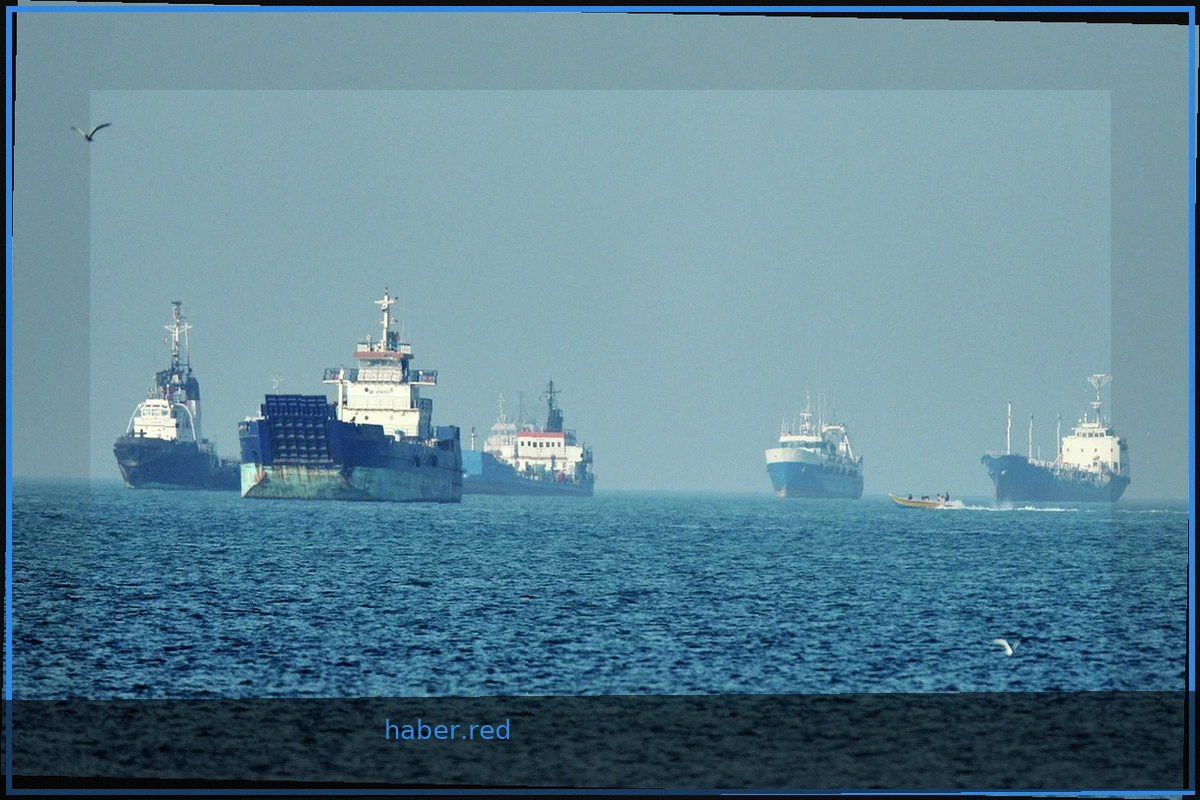
Iran and Oman have reached an agreement regarding safe passage routes through the Strait of Hormuz. Iran's Foreign Ministry spokesperson, Esmaeil Baghaei, stated that details of these agreed-upon routes will be communicated to the relevant international body, as reported by Press TV. The ag

Kyiv Air Raid Alert Declared
Air raid sirens have been declared in Kyiv, as shown by data from the Ukrainian Ministry of Digital Transformation's online map. The alert in the Ukrainian capital began at 23:30 Moscow time. Sirens are also active in parts of Ukraine's Poltava and Chernihiv regio

French Intelligence Mistook Institute for Internet Development for Iran
Arnaud Frilley, director of the Sergei Rachmaninoff Conservatory in Paris and a producer, recounted an incident where French intelligence services interrogated him about supposed ties to Iran. The confusion arose because they mistook the Institute for Internet Development (IRI) for th